
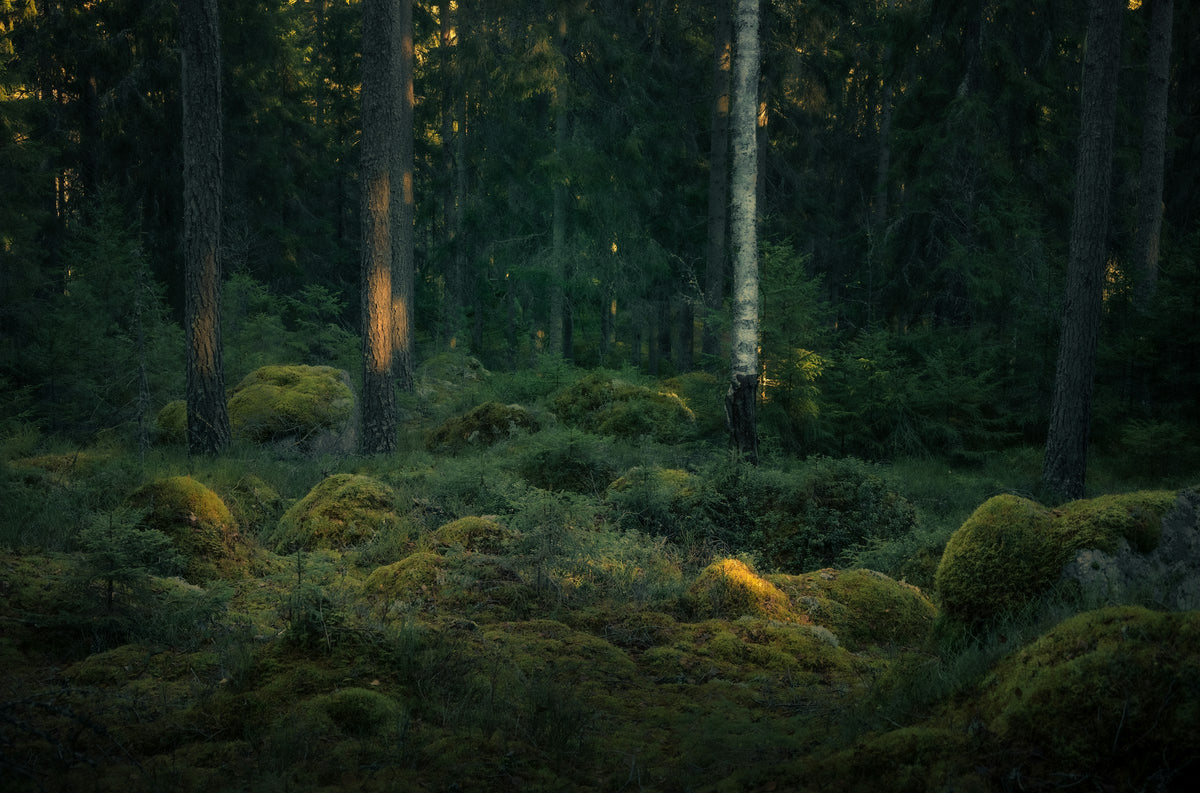
Biophilic design: how to bring nature into your space with moss
Biophilic design is one of the big topics in office and interior design, and for good reason. The idea is simple: people feel better in spaces that bring nature inside. Here is what the term really means, what research says about it, and how preserved moss can help you put it into practice without the effort of a living plant wall.
What is biophilic design?
"Biophilia" means love of life or of living things. The biologist Edward O. Wilson made the term popular in his 1984 book Biophilia: humans have an innate need to connect with nature. Biophilic design takes this idea into architecture and interiors: daylight, plants, natural materials, natural shapes and views of greenery.
A widely used framework comes from the consultancy Terrapin Bright Green. Their report 14 Patterns of Biophilic Design (2014) groups the principles into three areas:
- Nature in the space: plants, water, daylight, fresh air. Nature you can see, hear or feel directly.
- Natural analogues: materials, colours, textures and shapes that remind us of nature, such as wood, stone, cork or organic forms.
- Nature of the space: spatial qualities like a good view, a sense of refuge or a little mystery.

Why it matters: what research shows
The global Human Spaces report (2015), commissioned by the flooring company Interface, surveyed more than 7,600 office workers in 16 countries. People who worked in spaces with natural elements such as greenery and daylight reported 15 % higher wellbeing, felt 6 % more productive and 15 % more creative than people in spaces without them.
Results like these are self-reported and depend on many factors. But they match what most of us feel: a room with green elements is calmer, warmer and more pleasant to spend time in.

Where preserved moss fits in
Preserved moss is real moss that has been preserved so it no longer grows. It is not a living plant, but it is a genuine natural material with the colour, texture and softness of the forest floor. That makes it a good fit for two of the biophilic patterns in particular: a visual connection with nature and a material connection with nature.
The practical advantage: moss pictures and moss walls need no water, no soil and no daylight. They work in meeting rooms without windows, in hallways, receptions and restaurants, where living plants often struggle. There is no irrigation system to install and no gardener to book.
And there is a bonus: moss has an open, porous structure that can reduce reverberation, especially in larger areas and combined with a sound-absorbing base such as cork. More on that on our upcycling & acoustics page.

A room with green feels calmer, warmer and more pleasant.Biophilic design
5 ways to bring biophilic design into your space with moss
- A moss wall in the reception: the first impression of your company. Green, calm and memorable. Optionally with your logo.
- Moss pictures in meeting rooms: a natural focal point that also helps with acoustics.
- Cork hexagons with moss: combine two natural materials (Portuguese cork and preserved moss) in a pattern you design yourself.
- Mix moss types: pole moss, flat moss and preserved plants create depth and the look of a forest floor.
- Combine with other natural analogues: wood, cork, stone and warm light reinforce the effect.
Tips for planning
- Choose a spot without constant direct sunlight and away from radiators.
- Larger surfaces have a stronger effect, both visually and acoustically.
- Think about the view: where do people look when they enter, wait or sit in a meeting?
- Plan the wall load: depending on the greening, moss weighs approx. 6 to 16 kg per m².
Want to bring more nature into your space? Use our configurator for moss walls and custom pieces or send us a free, non-binding request. Every piece is handmade by our team in Porto.